Live since September 2026
SGOAT: a music draft game, built, drawn, scored and run with AI
A daily game where you draft a band from real musicians and find out whether it's the greatest of all time or a spectacular disaster. At the end of every draft you hear your band play, and you can share it as a video. AI generates that sound for each band from each musician's style, the tempo and the key.
- Started
- Summer 2026
- Built with
- Next.js PWA · MusicBrainz data · Claude Code · fal.ai · ElevenLabs · Meta's Muse · Buffer · PostHog · Vercel · Cloudflare R2
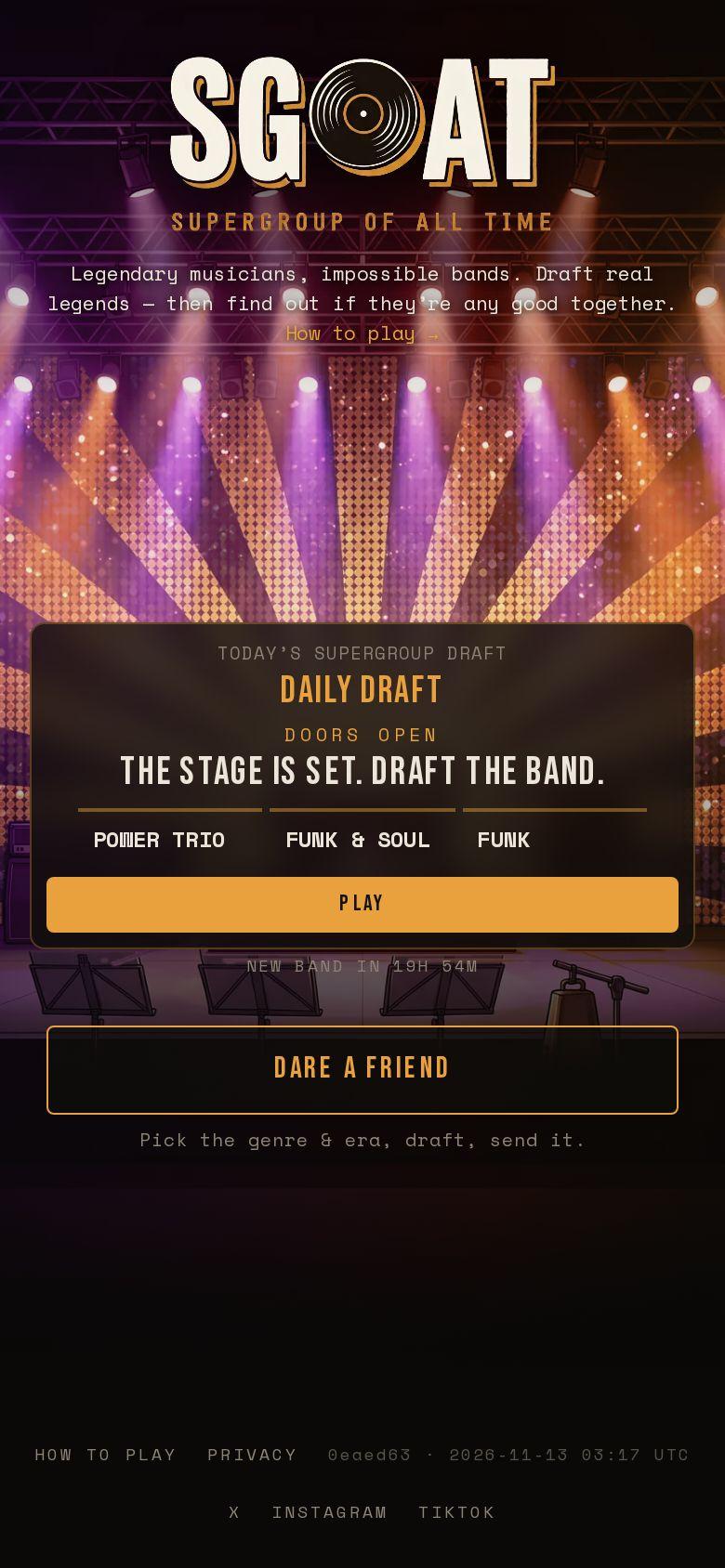
Legendary musicians. Impossible bands. Would yours survive? The best musicians don't always make the best band. SGOAT lets you draft real legends, weigh talent against chemistry, and get a verdict worth arguing about. Then you hear your band play: AI generates the sound for each band, with every musician playing in the style of their own era and scene, at the tempo and key the first pick sets. Share it as a video and dare a friend to beat it.
By the numbers
No ads, no influencers. In late September I submitted SGOAT to four daily-games directories, free tier only. One of them listed it the day after the November upgrade, and it brought more players in four days than the first two months combined. Every link carries a referral code, so I know exactly where each player came from.
The spark
In June 2026, an NBA player posted his lineup from 82-0, a simple browser game where you draft five players from a franchise and a sim tells you how close they'd get to a perfect season. It spread fast, because everyone has an opinion about an all-time lineup.
Music fans have the same argument, and have had it for fifty years: who's the best guitarist, which supergroup would actually work. Nobody had turned it into a game backed by real data. I wanted to know if I could build one, alone, on nights and weekends, with AI doing most of the typing.
The product problem: you can't score taste
A basketball sim has box scores. A band has none. So the rule I set early was: score the facts and let people fight over the rest.
- Skill comes from session credits and critics' all-time lists.
- Chemistry comes from the open MusicBrainz database: which artists really recorded together, across every era from the British blues boom to blog-era indie.
- Ego comes from history. Draft a Gallagher next to someone from Blur and chemistry takes the hit. Known good collaborators don't trigger it.
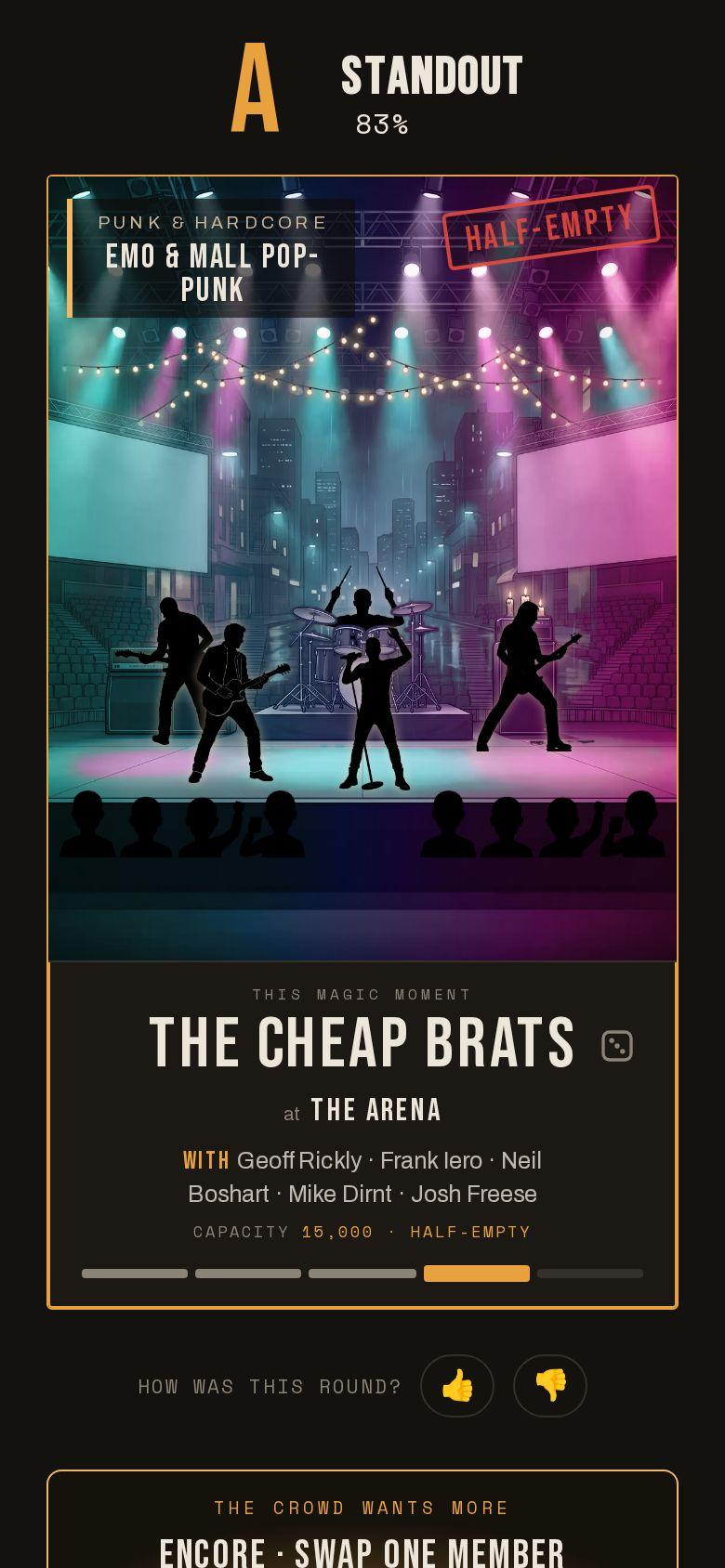
- The verdict gives every band a name, a venue and a review, like "The Prodigals, at The Arena, sold out twice over." It's a screenshot people want to share.
How it plays
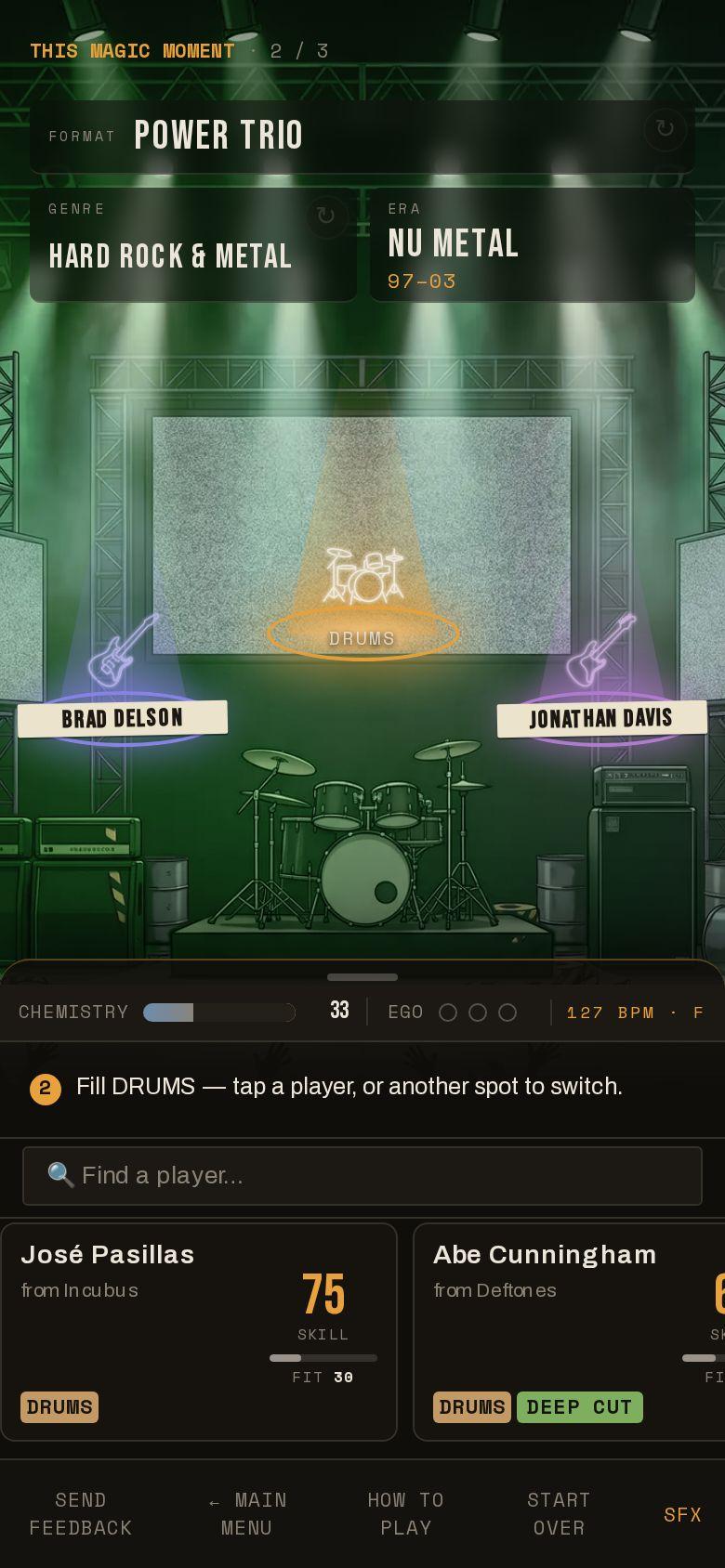
- SpinA format, a genre and an era: Power Trio, Blues Rock, Southern Rock '72–77.
- DraftFill each seat from that era's real players and watch Chemistry and Ego move.
- VerdictA grade, a venue, a band name and the reasons.
- DareSend your band to a friend as a link. Your players are off the board, so they have to beat you without them.
The upgrade: from a form to a night at the show
The first version worked but looked like a spreadsheet with a grade. In early November I rebuilt how it looks and sounds, with AI making every picture and every note and me approving each one:
- fal.ai drew an illustrated stage for each of the 30 genres, five venues from a block party to a stadium, and the props on each stage. Its Demucs model split every song into instrument stems.
- ElevenLabs composed original music for every scene, plus sung hooks, an announcer and a crowd. The game then builds each band's sound on the fly: every musician you draft plays their part in the style of their own era, the first pick sets the tempo and key, a band with bad chemistry drifts out of time and tune, and a great one gets the crowd singing. You hear the whole band at the end of every draft, and can share it as a 12-second video.
- Claude Code wired it all into the game, checked every asset, and built the finale and a shareable poster and video of your band.
The rules for the AI music were simple: original songs in each genre's style, no artist names in any prompt, no cloned voices.
A one-person studio, run with agents
The interesting part for me wasn't the game. It was running a live consumer product with a team of AI agents and one human approving the work.
Taste and approvals
Me
- Decide what ships and what gets cut
- Record draft-reaction videos
- Approve every post from my phone
- Read the analytics and adjust the plan
Build, art direction, data, QA, scheduling
Claude Code
- Writes the app and the data pipeline, with tests on every change
- Drives fal.ai and ElevenLabs for the art and music, and checks every asset
- Replays real players' sessions in a headless browser to find what breaks
- Runs a cloud job that schedules posts through Buffer and emails me a report
Creative and social
Muse (Meta)
- Edits the videos and makes the daily teaser card
- Posts natively to Instagram and Facebook
- Handles comments and helps with outreach
The plumbing is deliberately boring: a push to main goes live on Vercel, a Google Sheet is the content queue, Buffer posts to X, TikTok and YouTube, and every link carries a referral code so analytics can tell which post brought which player.
What real players changed
I shipped early to friends, watched the analytics, and changed the product based on what people did, not what they said.
Players skipped the menu. They wanted the draft.
The band name above the grade was read as a bad grade.
Social apps' in-app browsers wiped drafts in progress.
Dares are how friends play. Directories are how strangers find it.
A grade that's easy to get isn't worth bragging about.
What I took back to my day job
My day job is building payment products on regulated rails. SGOAT was a different kind of product, but the lessons transferred directly:
- Agents are a team, not a tool. They work best with clear roles, written rules and a human gate on anything public. That's the same operating model as a compliance-heavy launch.
- Distribution is a product feature. Being listed where people already look for a daily game did more for growth than any new game mode.
- Ship small, measure, cut. The best changes were deletions.
- Speed changes the economics of trying. A product with original art and music, which would have needed a small team and a quarter, took a few months of evenings.
What's next
Bringing players back every day (streaks, reminders, a home-screen app), then accounts with leaderboards, and more genres and eras on the same engine.